
Trade as the New Diplomacy
Senator Igor Morozov, who heads the Coordinating Committee on Economic Cooperation with Africa, told participants that Russia “left Africa” after the Soviet collapse — and must now return with substance. His remarks underscored a broader shift: Moscow’s foreign-policy pivot from politics to products.
At the center of this effort is the Russian Export Center, which has begun promoting vehicle exports to Egypt, wheat shipments to North Africa, and joint trade missions to uncover new markets. Africa’s 1.3 billion-person consumer base, Russian officials say, could help replace lost Western demand.
Soft Power Meets Strategy
The Kremlin’s playbook extends beyond trade. Cultural exchanges, student programs, and sporting partnerships are being revived — part of a soft-power revival meant to win hearts as well as contracts. Yet, compared with China or even France, Russia’s presence remains modest: its annual trade with Africa is roughly one-tenth of China’s and less than half of France’s.
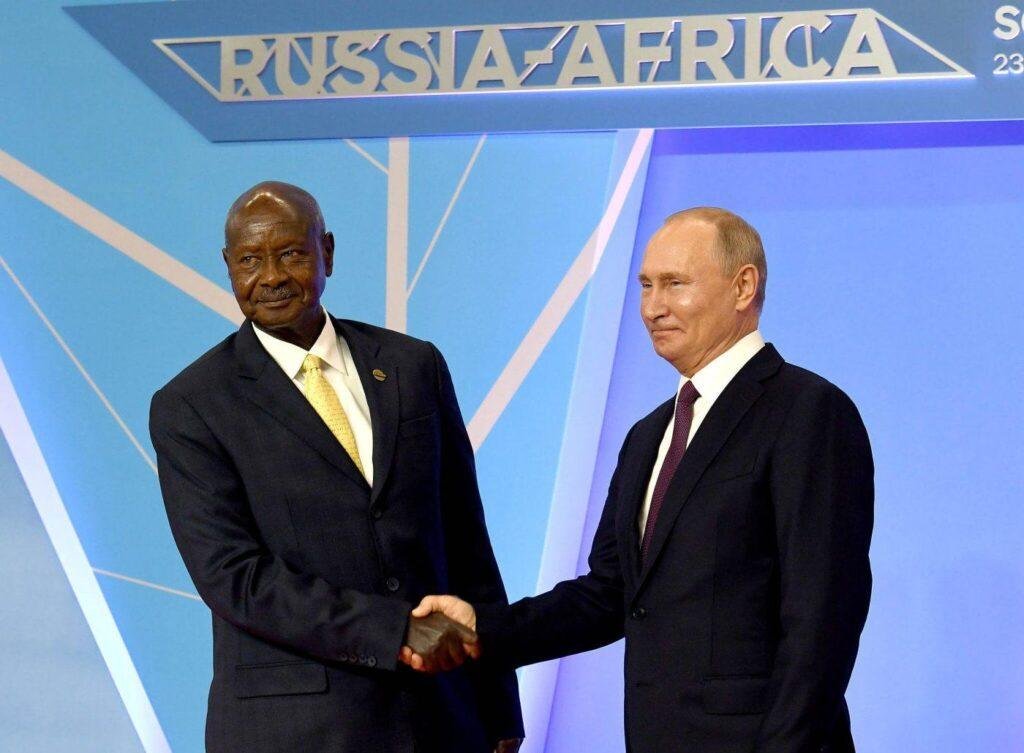
Still, momentum is visible. In 2024, Russia–Africa trade rose more than 17 percent, surpassing $25 billion. President Vladimir Putin, at the 2019 Sochi Summit, set a $40 billion target that now looks within reach — if Moscow can sustain its push.
The Roadblocks Ahead
Russia’s challenge lies not only in logistics but in structure. Senator Morozov has proposed an investment fund within the Russian Export Center to support exporters through financing and concessions — mirroring the mechanisms that fueled China’s success. Senator Alexey Pushkov added that “long-term guarantees and subsidies” are essential if Russia hopes to compete abroad.
African Receptivity, Conditional
African governments, for their part, are keeping the door open. During his recent tour, Foreign Minister Sergei Lavrov said partners “would welcome our companies” — provided Russian firms bring quality, reliability, and genuine partnership. Many African states view Moscow as an alternative to traditional Western donors, yet expect real capital and technology, not just political promises.
A Contest for the Continent
Moscow’s renewed courtship of Africa is not merely commercial; it is geopolitical. As Washington’s African Growth and Opportunity Act (AGOA) framework loses steam and Beijing tightens its grip, Russia is racing to fill the vacuum. Whether this new relationship becomes a stable partnership or a temporary alliance of convenience will depend on how much Moscow is willing — and able — to invest.
